
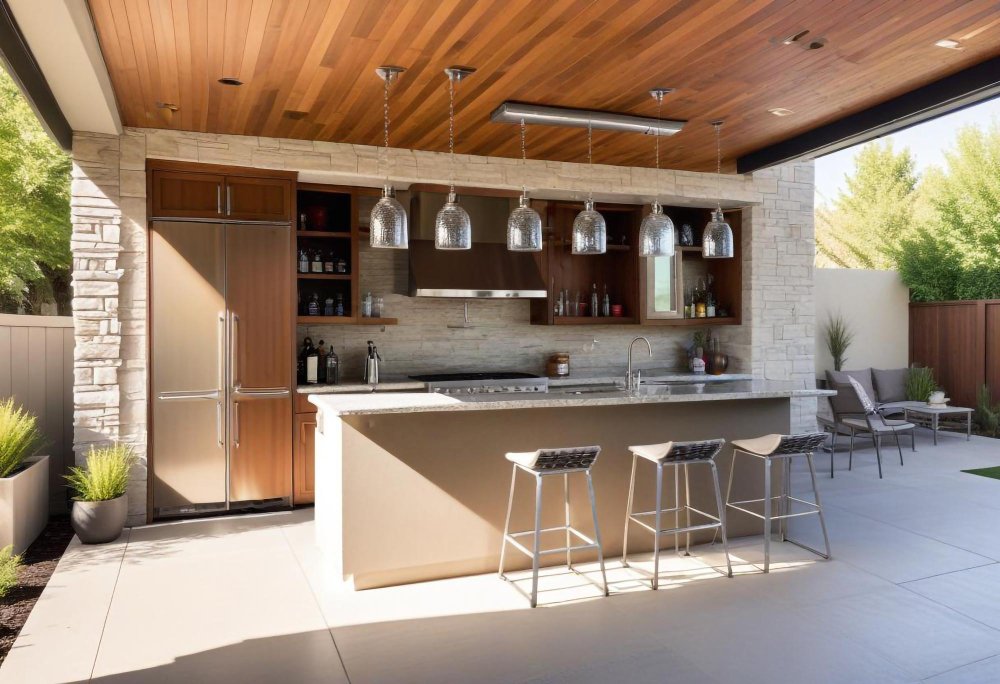
What Homeowners Should Know Before Building an Outdoor Kitchen
When the Harrison family first talked about renovating their backyard, the plan sounded surprisingly simple. They imagined adding a larger patio, replacing a few worn-out chairs, and buying a better grill before summer arrived. It seemed like the perfect weekend project. Then something unexpected happened. As they gathered outside more often—with neighbors dropping by, birthdays moving outdoors, and quiet dinners stretching into late evenings—they realized the grill was no longer enough. Every meal required constant trips back into the house for ingredients, utensils, drinks, and serving dishes. The backyard was beautiful, but it never felt complete.“What began as a new grill eventually became an entirely new way of living outdoors.”That realization led them to something much larger: designing an outdoor kitchen that could function as naturally as the one inside their home.
Chapter One: Seeing the Backyard Differently
The family’s first instinct was to focus on appliances. A built-in grill seemed like the obvious centerpiece, followed by a refrigerator and perhaps a pizza oven. But after meeting with a designer, they quickly learned that successful outdoor kitchens begin with planning—not equipment. The first question was location. Placing the kitchen too far from the house would make carrying groceries and serving meals inconvenient. Building it too close to seating areas could send smoke toward guests. Utility access also became part of the discussion, since gas, electricity, water, and drainage would all influence the final design. For the first time, they realized they weren’t simply adding appliances—they were creating an outdoor room. Weather soon entered the conversation as well. Afternoon sunlight, prevailing winds, and seasonal rain all affected where cooking stations, dining areas, and shade structures should be positioned. Every decision made the future kitchen more comfortable before a single stone had been installed.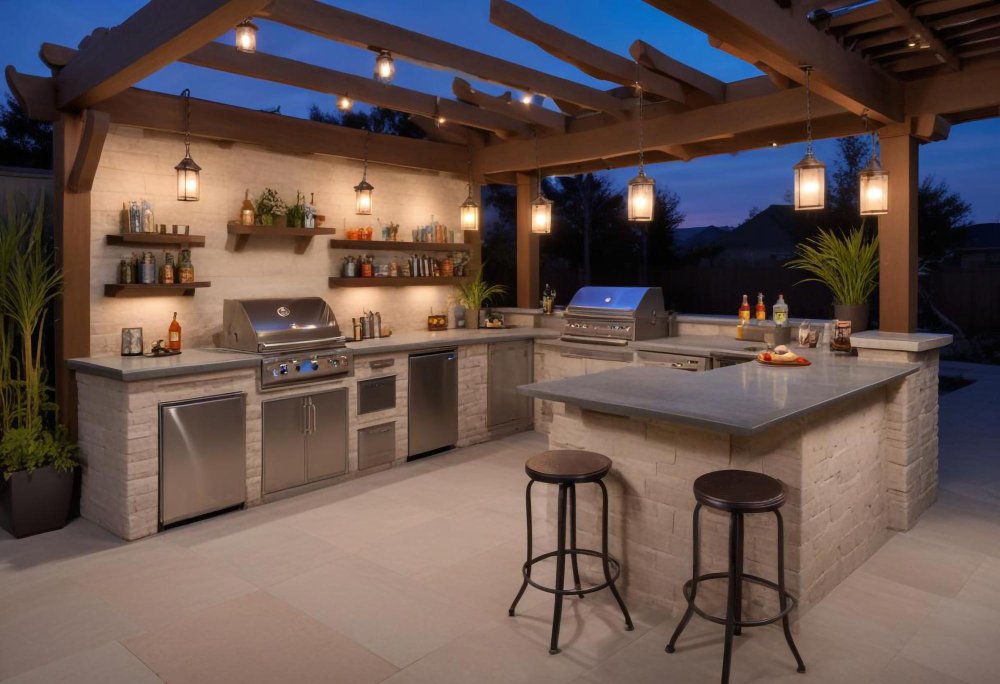
Chapter Two: Building for Everyday Life, Not Just Special Occasions
As construction plans developed, the Harrisons discovered that the most successful outdoor kitchens are designed around daily habits rather than occasional celebrations. Counter space became just as important as the grill itself. Food preparation, serving platters, and space beside hot cooking surfaces all required generous work areas. Storage also proved essential. Instead of carrying utensils and supplies outdoors every weekend, weather-resistant cabinets allowed everything to remain exactly where it was needed. Material selection demanded equal attention. Stainless steel appliances resisted changing weather conditions, while stone countertops provided durability through years of outdoor cooking. Exterior-rated cabinetry and porcelain surfaces promised easier maintenance despite constant exposure to sun, rain, and temperature changes. Lighting transformed the project even further. Task lighting illuminated cooking areas after sunset, while softer ambient fixtures created an inviting atmosphere long after dinner had finished.“The best outdoor kitchens don’t simply make cooking easier—they encourage people to stay together longer.”Even ventilation became part of the design. Covered patios required proper airflow to prevent smoke from lingering, proving once again that thoughtful planning often determines comfort more than expensive appliances.
Chapter Three: A Backyard That Became Part of the Home
Several months after the project was complete, the Harrisons noticed something they had never anticipated. The outdoor kitchen had changed more than the backyard—it had quietly changed their routines. Weeknight dinners moved outside whenever the weather allowed. Friends gathered around the preparation area instead of waiting indoors. Family celebrations naturally expanded across the patio, with cooking and conversation happening in the same space rather than separate rooms. The renovation had not created a luxury feature for occasional entertaining. It had created another place to live. Looking back, they agreed the most valuable decisions were not choosing the grill or countertop finish. They were the less obvious choices: selecting the right location, planning generous work surfaces, investing in durable materials, and working with professionals who understood utilities, drainage, and long-term performance. An outdoor kitchen is often viewed as an upgrade for entertaining, but its greatest value lies elsewhere. When thoughtfully planned, it becomes a seamless extension of the home—a place where everyday meals feel a little more relaxed, conversations last a little longer, and the boundaries between indoor comfort and outdoor living quietly disappear.“Sometimes the most meaningful renovation isn’t about adding space. It’s about discovering a better way to enjoy the space you already have.”